
Aluminum Recycling Near Me for Small Loads That Pay
July 24, 2026
Recycling Ogden Utah: What to Bring and Where to Go
September 8, 2026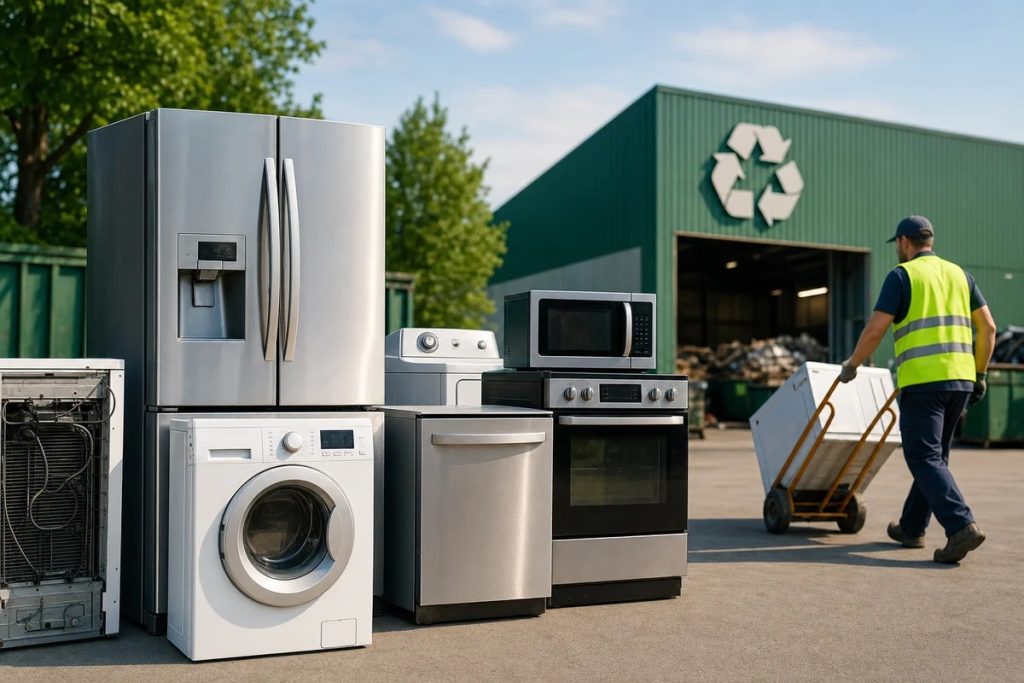
What appliance recycling means
When you search appliance recycling near me, you are usually trying to find a nearby place that takes an old washer, fridge, stove, or dryer. You are not looking for a general junk hauling article, you want a place that can accept the appliance, sort it, and move it through the right disposal stream.
That is different from donation and curbside trash pickup. Donation only works when the appliance is clean, safe, and still useful, while most trash crews will not take heavy units, refrigerant-bearing appliances, or anything that can damage a truck or break local pickup rules. Recycling is the option for items that are too worn out, too heavy, or too regulated for normal waste collection.
The key point is that appliance recycling is not one universal service. Accepted items, prep rules, loading help, and whether you need special handling for refrigerant or motors all vary by location. If you are headed to what we buy at Clearfield Recycling or another local yard, it pays to confirm the basics before you load the truck.
What local appliance recycling centers accept and what they turn away
Most local appliance recycling centers accept the common metal-heavy household items, including refrigerators, freezers, washers, dryers, dishwashers, and stoves. Those units are usually worth handling because they contain steel, aluminum, copper, and motors that can be separated after drop-off.
The difference is in the details. A plain steel dryer shell is simple to process. A refrigerator or freezer is more complicated because it has refrigerant and sealed cooling components. Plastic trim, missing doors, attached hoses, and leftover food or water can change whether the yard takes it, asks you to prep it first, or rejects it altogether. At Clearfield Recycling, the same basic rule applies, the material matters, and so does the condition of the unit.
- Often accepted: refrigerators, freezers, washers, dryers, dishwashers, ranges, stoves, and stripped appliance shells made mostly of metal.
- Sometimes accepted with prep: units with compressors, motors, or sealed systems once the refrigerant has been properly handled.
- Often turned away: dirty units, appliances with food or standing water inside, pieces with hazardous leaks, or items that have not been prepared according to site rules.
Some yards treat a bare appliance shell like scrap metal and weigh it with the rest of the load. Others reject anything that has not been drained, cleaned, or stripped down enough to match local policy. A reported visit at a similar yard involved aluminum, other non-ferrous metals, and steel appliances like refrigerators and stoves, then a weigh-in before payout. That is a common model, but not every site handles appliance disposal the same way.
How a drop-off works from unloading to weighing
Once you know the yard will take the unit, the visit is usually simple. The exact layout differs between a scrap yard, a municipal drop-off site, and a private recycling center, but the sequence is familiar.
| Site type | What feels different | What to expect |
| Scrap yard | Usually the most focused on metal value and sort order | Check in, unload in the right area, then weigh the load |
| Municipal drop-off site | More rules around scheduling and accepted items | Staff may direct you to a specific lane or container |
| Private recycling center | Often the most flexible, but still selective on prep | Some items are paid by weight, others are accepted only for disposal |
- Check in first. Tell the gate or counter what you brought, whether it has a compressor or motor, and where it should go. Some sites want refrigerators and freezers in a separate line.
- Unload at the correct spot. Bring a truck or trailer if you have one, and bring another person if the appliance is too heavy to move safely alone. That matters more than people expect, especially with side-by-side refrigerators and older cast-iron stoves.
- Sort by material if asked. Many yards separate steel, aluminum, motors, and mixed scrap before anything gets weighed. If you are dropping off several items, keep appliance shells apart from loose metal parts so the staff can process them faster.
- Weigh the load. Some sites weigh the appliance before and after unloading. Others weigh the item by itself. If payment is offered, the number usually reflects weight and metal content, not the number of appliances you brought.
- Get your receipt or payout. Keep the paperwork if the site issues one. It helps if you come back with another load or if your county asks for proof of proper disposal.
If you are unsure where to leave a unit with a compressor or motor, ask before you unload. That one question can save you from dragging a heavy fridge across the wrong lot. At Clearfield Recycling, asking up front is the cleanest way to keep the process moving and avoid a second walk back to the gate.
How to prep your appliance and decide if recycling is the best fit
The best prep is basic but non-negotiable: empty the appliance, unplug it, and clean it before transport. That means removing food residue, wiping out spills, draining water lines, emptying ice makers, and taking out loose shelves or bins that could shift in the truck.
Doors should be taped shut if the unit can swing open during loading, and hoses should be drained so you do not unload a puddle at the site. For refrigerators and freezers, check whether refrigerant removal is required before drop-off. Some locations will only take the unit after that step is complete, while others handle it under their own rules.
Recycling usually makes more sense than donation when the appliance is damaged, outdated, missing major parts, or mostly made of recoverable metal. A dented washer with a dead motor is a better fit for recycling than for reuse. The same is true for a stove with broken controls or a fridge that no longer cools and would cost more to fix than replace.
Local appliance recycling can also be the simplest answer when the item is too heavy for bulk trash rules. If your city will not pick up appliances or limits them to a narrow pickup window, a drop-off site is often faster. If you are comparing recycle appliances near me options, the decision usually comes down to whether you can move it safely and whether the site accepts it in its current condition.
Before you head out, check one more thing: whether the appliance has gas lines, water lines, or a sealed cooling system that needs special handling. If it does, call ahead. If you're headed to Clearfield Recycling, our team can tell you which prep steps matter most before you haul it in.
Questions people ask before using appliance recycling near me
Here are the short answers people usually need before they haul a unit across town. If you're deciding between appliance disposal near me options, these are the questions that keep a drop-off from turning into a wasted trip.
Can I bring a refrigerator with food still inside?
No, most appliance recycling near me drop-offs will not take a refrigerator with food still inside. Food creates odor and contamination, and empty units are the normal rule for disposal sites. Remove the shelves or bins if they can break loose in transit.
Do recycling centers pay for appliances?
Yes, some do, but payment is usually based on weight, metal content, and yard policy. A steel-heavy washer or stove is more likely to be paid than a mostly plastic unit with missing parts. Some places accept the appliance only for recycling and do not pay out at all.
What appliances need special handling?
Refrigerators, freezers, and any unit with refrigerant or a compressor need special handling. Confirm whether the site wants sealed systems, gas lines, or fluids dealt with before arrival. That is the difference between a smooth drop-off and a turned-away load.
Is pickup ever better than drop-off?
Yes, pickup is better when you do not have a truck, do not have lifting help, or the appliance is too large to move safely. The tradeoff is usually a pickup fee or a schedule window instead of a same-day drop-off. If you can load it securely, drop-off is usually faster.
Ready to clear out the appliance the right way?
If you have a fridge, washer, stove, or another metal appliance ready to go, our team at Clearfield Recycling can help you sort out the next step before you load it. Use our contact page, and we will help you figure out what to bring and how to prep it.